Reformation Day 2026: Meaning, History and How to Observe It

Reformation Day falls on Saturday, 31 October 2026, and many churches will mark it on Reformation Sunday, 25 October. It remembers the day in 1517 when Martin Luther made public his Ninety-five Theses and started a debate that changed the Christian world. In this guide, we explain what Reformation Day is, what happened in 1517, the key truths it recovered, and how believers from every tradition can mark the day with humility and hope.

What is Reformation Day?
Reformation Day is a Protestant Christian holiday held every year on 31 October. It recalls the start of the Protestant Reformation, a movement that called the church back to the authority of Scripture and the message of grace.
In Germany, several states keep it as a public holiday. Elsewhere, Lutheran, Reformed and many other churches remember it in worship. Some congregations hold special services on 31 October itself. Others, for example, use the Sunday before, known as Reformation Sunday.
In 2026, the Lutheran Church–Missouri Synod calendar suggests readings such as Psalm 46 and John 8:31–36 for the day. Meanwhile, other Lutheran groups list Romans 3:19–28 and Revelation 14:6–7 for Reformation Sunday.
What happened on 31 October 1517?
Martin Luther was a German monk and a professor of theology at the University of Wittenberg. At that time, the church was selling indulgences, which promised a reduced penalty for sin in exchange for money. This troubled Luther, because he believed this practice hid the free grace of God.
So on 31 October 1517, he wrote out his Ninety-five Theses, a list of points for debate about indulgences and repentance. He sent them to Archbishop Albert of Mainz. According to tradition, he also nailed them to the door of All Saints’ Church, the Castle Church in Wittenberg.
Interestingly, historians note that the nailing story comes mainly from Luther’s colleague Philip Melanchthon. Even so, the date matters more than the door. Within weeks, printers had copied the theses, and the debate spread across Europe.
Why Reformation Day still matters
At its heart, Reformation Day is not about one man or one church door. Instead, it is about a question every believer still asks: how can a sinner be right with a holy God?
Luther found the answer in the book of Romans. Paul writes, “Therefore we conclude that a man is justified by faith without the deeds of the law” (Romans 3:28). In other words, salvation is a gift received by faith, not a reward earned by effort. Our article on being saved by grace explains this truth in more depth.
That discovery brought Luther deep peace. Later he wrote that he felt as if he had been born again and had entered paradise through open gates.
The five solas of the Reformation
Over time, the Reformers summed up their teaching in five short Latin phrases, often called the five solas. Each one begins with “sola”, meaning “alone”.
- Scripture alone (Sola Scriptura): the Bible is the final authority for faith and life.
- Grace alone (Sola Gratia): salvation is God’s free gift, not something we deserve.
- Faith alone (Sola Fide): we receive that gift by trusting Christ.
- Christ alone (Solus Christus): Jesus is the only mediator between God and people.
- Glory to God alone (Soli Deo Gloria): we live all of life for God’s honour.
The Reformers never meant these phrases as slogans against other Christians. Rather, they were a way to keep the gospel clear. If you want a simple summary of that message, read what is the gospel.
Faith that works: a balanced view
Some people think the Reformation taught that good works do not matter. However, that is not what the Reformers meant. They taught that good works are the fruit of salvation, not its root.
James wrote that “faith without works is dead” (James 2:26). Paul and James do not contradict each other. Instead, Paul shows how we are saved, while James shows what saving faith looks like. Our study on how James and Paul agree walks through this carefully.
Martin Luther and “A Mighty Fortress”
Luther also loved music. Indeed, he believed hymns could carry the gospel into homes and hearts. His best-known hymn, “A Mighty Fortress Is Our God”, draws on Psalm 46. That is one reason many churches read Psalm 46 on Reformation Day.
The psalm opens with the words, “God is our refuge and strength, a very present help in trouble.” For Luther, who lived under threat for years, this was not theory. It was daily comfort. You can explore the psalm itself in our guide to Psalm 46.
How to observe Reformation Day in 2026
You do not need to belong to a particular denomination to give thanks for the recovery of the gospel. Here are simple ways to mark Reformation Day this year:
- Read Romans 3 and 5. Slowly read the chapters that changed Luther’s life, and note every mention of grace.
- Sing a Reformation hymn. For example, sing or listen to “A Mighty Fortress Is Our God” with your family.
- Thank God for the Bible in your language. Luther translated the New Testament into German so ordinary people could read it.
- Pray for Bible translators. Many language groups still have no complete Bible.
- Teach the children. Tell the story of 1517 in simple words, and explain why grace is good news.
- Examine your own heart. Ask whether you are trusting Christ alone or quietly trying to earn God’s love.
Reformation Day and Christian unity
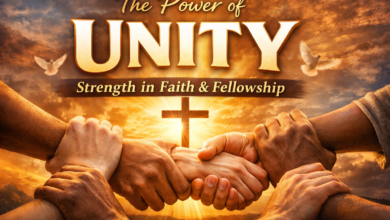
For many believers, Reformation Day also brings sorrow. After all, the Reformation led to deep divisions, and sometimes to violence. Today, many churches remember 1517 with both gratitude and repentance.
In recent decades, Lutherans and Catholics have held joint services and signed shared statements on justification. That does not erase every difference. Still, it shows that Christians can speak honestly about history while seeking peace. Jesus prayed that His followers “may be one” (John 17:21), and our article on why God wants His people to stand together explores that prayer.
So a healthy way to keep Reformation Day is to hold on to the gospel firmly, while treating other believers with grace.
Reformation Day versus Halloween
Because both fall on 31 October, some families feel torn. In fact, many churches now host Reformation Day events as a positive alternative. These may include Bible readings, costume nights based on church history, hymn singing and simple meals.
Whatever your family decides, the goal is the same. Point hearts to Christ, and use the day to talk about what really matters.
A prayer for Reformation Day
“Lord God, thank You for Your Word, which is a lamp to our feet and a light to our path. Thank You for grace that we could never earn, and for faith in Jesus Christ, our only Saviour. Reform our hearts again. Where we have trusted in ourselves, turn us back to You. Where we have divided Your people, teach us humility and love. Keep Your church faithful to the gospel, and let everything we do bring glory to You alone. In Jesus’ name, Amen.”
Frequently asked questions
When is Reformation Day 2026?
Reformation Day is on Saturday, 31 October 2026. Many churches will mark Reformation Sunday on 25 October.
Who started the Reformation?
Martin Luther is usually seen as the starting point, but others, such as John Calvin and Ulrich Zwingli, also shaped the movement.
Is Reformation Day only for Lutherans?
No. Lutherans keep it most widely, yet many Reformed, Baptist and other Protestant churches remember it as well.
What Bible verse is linked with Reformation Day?
Romans 1:17, “The just shall live by faith”, and Romans 3:28 are closely linked with Luther’s discovery. Many churches also read Psalm 46.
Key lessons
To sum up, Reformation Day remembers 31 October 1517, when Martin Luther’s Ninety-five Theses began a call to return to Scripture and grace. Its message is still simple and powerful: we are saved by grace, through faith, in Christ alone. Therefore, mark the day by reading God’s Word, giving thanks for the gospel, and praying for a church that is both faithful and united.
Further reading
- What Is Communion? The Lord’s Supper Explained
- What Is the Gospel? The Good News Explained Simply
- The Ten Commandments Explained: Meaning for Today
Read the key passage: Romans 3:28 (KJV) on Bible Gateway.