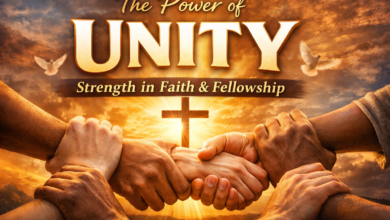
All Saints Day 2026: Meaning, History and How to Observe It


All Saints Day falls on Sunday, 1 November 2026. On this day, Christians around the world give thanks for the faithful believers who have gone before them, from the apostles to grandparents whose prayers shaped their families. In this guide, we explain the meaning of All Saints Day, its history, what the Bible says about saints, how it differs from All Souls Day, and simple ways to observe it at church and at home.

What is All Saints Day?
All Saints Day, also called All Hallows’ Day, is a Christian feast held on 1 November. It honours all the saints, known and unknown, who now rest with Christ.
Different traditions understand the day in slightly different ways. For example, Catholic and Orthodox churches honour the saints the church has recognised, as well as countless unnamed believers. Meanwhile, many Protestant churches use the day to remember all who died in faith, including members of their own congregation who passed away during the year.
In every tradition, however, the heart of the day is the same. God has been faithful to His people in every generation, and death does not have the final word.
A short history of All Saints Day
In the early church, believers remembered martyrs on the anniversary of their deaths. Over time, there were too many martyrs to give each one a separate day. So churches began to hold a shared feast for all the saints.
Different regions kept this feast on different dates. Then, in the eighth century, Pope Gregory III dedicated a chapel in Rome to all the saints on 1 November. Later, in the ninth century, Pope Gregory IV extended the feast to the wider Western church. As a result, 1 November became the common date.
The evening before was called All Hallows’ Eve, which later became “Halloween”. In the Eastern Orthodox Church, by contrast, All Saints Sunday falls on the first Sunday after Pentecost.
What does the Bible say about saints?
In the New Testament, the word “saint” means “holy one” or “one set apart”. Surprisingly, Paul uses it for ordinary believers. For instance, he writes “to all the saints in Christ Jesus which are at Philippi” (Philippians 1:1).
In other words, every person who trusts Christ is a saint in the biblical sense. This is not because they are perfect. Rather, God has set them apart for Himself through the work of Jesus.
Hebrews 11 gives a long list of believers who lived by faith, from Abel to the prophets. Then Hebrews 12:1 says, “Seeing we also are compassed about with so great a cloud of witnesses, let us lay aside every weight… and let us run with patience the race that is set before us.” Our study on the heroes of faith in Hebrews 11 explores these lives in more detail.
The cloud of witnesses
The phrase “cloud of witnesses” is at the centre of All Saints Day. It pictures a huge crowd in a stadium. Those who have finished the race now cheer on those still running.
This image brings deep encouragement. First, it reminds us that we are not alone. Second, it shows that others have faced trials, doubts and suffering, yet they stayed faithful. Finally, it points us to Jesus, “the author and finisher of our faith” (Hebrews 12:2), who ran the race before all of them.
The communion of saints
The Apostles’ Creed includes the words, “I believe in… the communion of saints.” This phrase teaches that all believers, living and departed, belong to one family in Christ.
Churches explain the communion of saints in different ways. Yet most agree on its core comfort. Because we are united to Christ, we are also united to one another. Death separates us for a time, but it cannot break that bond. Paul writes that nothing, “neither death, nor life”, can separate us from the love of God in Christ Jesus (Romans 8:38–39).
All Saints Day and All Souls Day: what is the difference?
Many people confuse the two days, since they sit side by side. Here is a simple way to tell them apart:
- All Saints Day (1 November) celebrates the saints and gives thanks for all who have died in faith.
- All Souls Day (2 November), kept mainly in the Catholic Church and some Anglican churches, is a day of prayer for all the faithful departed.
Many Protestant churches, on the other hand, combine both ideas into one All Saints service. During that service, they read aloud the names of members who died in the past year.
How churches observe All Saints Day
Services vary from church to church, but common practices include:
- Reading the names of members who died during the year, often while a bell rings.
- Lighting candles as a sign that Christ is the light of the world.
- Singing hymns such as “For All the Saints” by William Walsham How.
- Sharing communion as a sign of unity with believers in every age. You can read more in our article on what communion means.
- Remembrance displays, such as ribbons, photos or written prayers.
In 2026, because 1 November is a Sunday, many congregations will hold their remembrance service on the day itself.
How to observe All Saints Day at home
You can also mark the day with your family, even if your church does not hold a special service:
- Read Hebrews 11 and 12 together. Talk about which believer in the list encourages you most.
- Tell family faith stories. Share how a parent, grandparent or mentor showed you what it means to follow Jesus.
- Light a candle. Thank God for loved ones who died in faith, and name them aloud.
- Write a thank-you letter. Write to a living believer who has helped your faith grow.
- Visit a grave or memorial. Pray there with hope, not despair.
Comfort for those who are grieving
For some people, All Saints Day is painful. It may be the first year without a husband, a mother or a child. If that is you, please know that the day is not asking you to hide your tears.
Even Jesus wept at the grave of His friend Lazarus (John 11:35). Yet He also said, “I am the resurrection, and the life: he that believeth in me, though he were dead, yet shall he live” (John 11:25). Christian grief is real grief, but it is grief with hope. Paul wrote that believers do not sorrow “even as others which have no hope” (1 Thessalonians 4:13).
If you are carrying loss right now, our article on finding hope when you are grieving offers gentle, practical help.
Living as a saint today
All Saints Day is not only about the past. It also calls us to live faithfully now. One day, others will remember us. So what kind of legacy are we leaving?
Consider these questions this week. Are you running your race with patience? Have you laid aside the weights that slow you down? Are you passing on your faith to the next generation? Small, steady acts of love and prayer often leave the deepest mark.
A prayer for All Saints Day
“Almighty God, thank You for the great cloud of witnesses who trusted You in every age. Thank You for the apostles and martyrs, and for ordinary believers whose names only You know. We thank You especially for those we have loved and lost, who now rest in Christ. Comfort all who grieve today. Give us grace to run our race with patience, looking to Jesus. Keep us faithful until we join all Your saints in Your presence. In Jesus’ name, Amen.”
Frequently asked questions
When is All Saints Day 2026?
All Saints Day is on Sunday, 1 November 2026. All Souls Day follows on Monday, 2 November.
Do Protestants celebrate All Saints Day?
Yes. Lutheran, Anglican, Methodist and many other Protestant churches keep it, often as a day to remember members who died during the year.
Is All Saints Day in the Bible?
The feast itself developed later in church history. However, its themes, such as the cloud of witnesses and the hope of resurrection, come directly from Scripture.
What is the connection with Halloween?
“Halloween” comes from “All Hallows’ Eve”, the evening before All Saints Day.
Key lessons
All Saints Day reminds us that God has kept His people in every generation. It celebrates the great cloud of witnesses, teaches the comfort of the communion of saints, and gives grieving families a place for both tears and hope. On 1 November, give thanks for those who have gone before you, and then run your own race with patience, looking to Jesus.
Further reading
- Advent 2026: Dates, Meaning, Candles and Bible Readings
- Reformation Day 2026: Meaning, History and How to Observe It
- How to Pray for the Persecuted Church: Bible Verses and Prayer Points
Read the key passage: Hebrews 12:1-2 (KJV) on Bible Gateway.